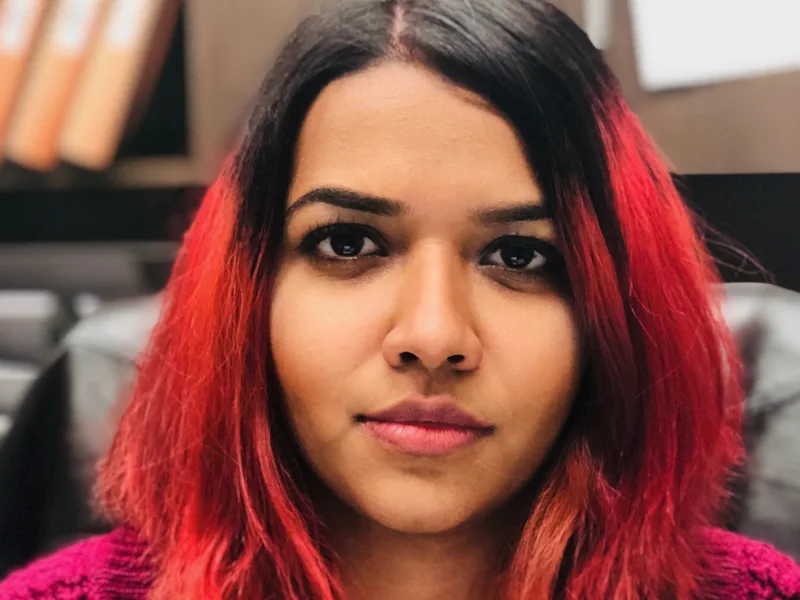
About Himayini
####Hi, I’m Ramona.
Thanks for stopping by!
I’m a Registered Social Worker, trauma counsellor, ADHD and academic consultant/coach, and University of British Columbia-affiliated social science researcher.
####Who I Work With
I provide individual and family counselling, as well as ADHD and educational coaching, in person in Vancouver and virtually across BC and Ontario.
I work with kids/youth, adults, and families with ADHD, related neurodivergences, and other learning differences and disabilities (e.g., autism, NVLD, dyslexia).
I also work with people with complex cultural identities, migration and immigration histories, and mixed-race or Third Culture (TCK/TCA) backgrounds.
I have a decade of experience working with these populations.
#####Research & Consulting
I also offer research consulting on qualitative, quantitative, and mixed-methods social science projects related to: (1) lived experiences of ADHD (especially those less captured by traditional medical models),
(2) cannabis and nicotine use among youth and young adults,
and (3) intersectional disability inclusion and health equity.
Learn more about [my research] (https://scholar.google.com/citations?hl=en&user=S6pfghkAAAAJ).
Check out my latest studies on [ableism] (https://www.mdpi.com/2076-0760/14/2/67), and [ADHD, culture, and time perception] (https://youtu.be/jF8ew2boo?si=w-OchRqtC1hSnJyU).
####My Background & Training
I am trained in Eye Movement Desensitization and Reprocessing (EMDR), Lifespan Integration (Levels 1 and 2), and Interpersonal Psychotherapy (IPT).
I also have advanced training in Cognitive Behavioral Therapy (CBT), Narrative Therapy, Emotionally Focused Individual and Family Therapy (EFIT/EFFT), Dialectical Behavior Therapy (DBT), psychedelic-assisted therapy and integration, mindfulness, executive functioning support, the Orton-Gillingham approach to dyslexia and dyscalculia, the ADHD Inside Out coaching framework, critical disability frameworks, and two-eyed seeing.
My educational background is in Clinical Social Work (MSW, UBC), Psychology (BSc, UBC), and Biochemistry & Molecular Biology (BSc, UBC).
I speak English, Hindi, Spanish, Portuguese, and Sinhala. I grew up in a diplomatic family and have lived in 12 countries across all inhabitable continents.
####My Worldview and Approach
Authenticity is at the core of how I work. As a mixed-race Third Culture Kid and first-generation immigrant, I understand what it means to navigate multiple identities, cultures, and systems while feeling misunderstood or like you don’t fully fit anywhere, especially when your brain or experiences don’t align with what’s expected.
I don’t see ADHD traits as a set of “symptoms” to fix, but as a unique way of thinking, relating, and experiencing the world, often shaped by years of misunderstanding, shame, and trying to function in systems that weren’t built for us. Similarly, I know how cultural identity, family expectations, and migration experiences can create their own forms of pressure, guilt, and disconnection that aren’t always seen by mainstream mental health frameworks.
My work focuses on helping you understand yourself, reduce shame, and build a life that actually works for you, rather than trying to change who you are or fit you into a box that was never designed with you in mind.
####If any of the above sounds of interest to you, go ahead and book a free consultation. At the very least, I can promise you a worthwhile conversation.
---
####References:
1. [Eye Movement Desensitization and Reprocessing (EMDR)] (https://www.apa.org/ptsd-guideline/treatments/eye-movement-reprocessing)
A trauma-focused therapy that helps the brain process difficult memories by stimulating both brain hemispheres (e.g., through eye movements or tapping).
2. [Lifespan Integration (LI)] (https://www.lifespanintegration.org/what-is-li/)
A gentle, body-based therapy that helps integrate past experiences into a more coherent sense of self across time.
3. [Interpersonal Psychotherapy (IPT)] (https://interpersonalpsychotherapy.org/ipt-basics/overview-of-ipt/)
A structured therapy focused on relationships, communication, and current challenges such as grief, life transitions, and interpersonal stress.
4. [Narrative Therapy] (https://dulwichcentre.com.au/what-is-narrative-therapy/)
A framework that explores identity, meaning-making, and the stories we hold about ourselves, while creating space for more authentic and empowering narratives.
5. [Cognitive Behavioral Therapy (CBT)] (https://www.apa.org/ptsd-guideline/patients-and-families/cognitive-behavioral)
A concrete, problem-solving approach that explores how thoughts, beliefs, and interpretations shape emotions, behaviors, and day-to-day experiences.
6. [Emotionally Focused Individual Therapy (EFIT) / Emotionally Focused Family Therapy (EFFT)] (https://iceeft.com/what-is-eft/)
Attachment-based approaches focused on emotions, bonding, relational patterns, and emotional awareness.
7. [Dialectical Behavior Therapy (DBT)] (https://www.health.harvard.edu/blog/dialectical-behavior-therapy-what-is-it-and-who-can-it-help-202401223009)
A skills-based therapy that supports emotion regulation, distress tolerance, mindfulness, and interpersonal effectiveness.
8. [Psychedelic-Assisted Therapy] (https://www.ptsd.va.gov/professional/treat/txessentials/psychedelicsassistedtherapy.asp)
An approach supporting the safe, intentional preparation and integration of altered-state experiences for emotional processing, insight, and change.
(Please note: I only provide Preparation & Integration support and [do not] (https://bccsw.ca/for-registrants/standards-scope-of-practice/practice-guidance/practice-guidance-document-for-registrants-psychedelic-assisted-psychotherapy/) handle psychedelic substances in session.)
9. [Solution-Focused Brief Therapy (SFBT)] (https://solutionfocused.net/what-is-solution-focused-therapy/)
A goal-oriented approach that builds on strengths and what is already working to support meaningful change.
10. [Mindfulness-Based Approaches] (https://www.verywellmind.com/mindfulness-based-cognitive-therapy-1067396)
Practices that help present-moment awareness and attention/emotion regulation.
11. [Orton-Gillingham Approach] (https://www.ortonacademy.org/resources/what-is-the-orton-gillingham-approach/)
A structured, multisensory approach to reading, spelling, and math using visual, auditory, and hands-on learning methods.
12. [ADHD Inside Out Framework] (https://www.adhdinsideout.com/learning/index.html)
A coaching framework focused on the lived experience of ADHD (e.g., time blindness, emotional intensity, motivation blocks), while reducing shame and building practical strategies that work for your brain.
13. [Critical Disability Studies] (https://cdsc.umn.edu/FAQs)
An interdisciplinary field examining how social, political, cultural, and systemic factors shape experiences of disability.
14. [Two-Eyed Seeing (Etuaptmumk)] (https://ctrinstitute.com/blog/two-eyed-seeing-vision-future/)
An approach rooted in Mi’kmaq teachings that brings together Indigenous and Western ways of knowing in a respectful and complementary way.
Pick a service, then a length and setting — times on the right follow your choice.