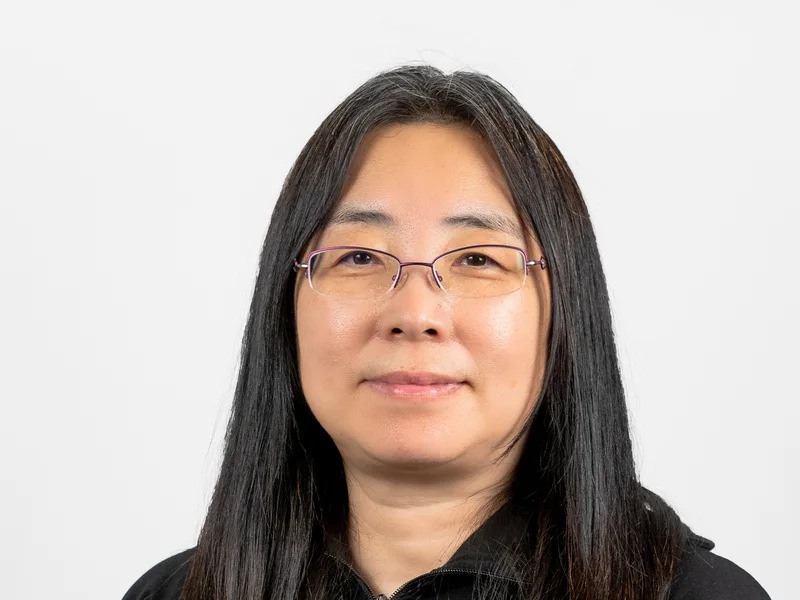
Dongmei(Betty) Ma graduated from the Changchun University of Traditional Chinese Medicine in Jilin Province, China, 30 years ago. After graduation, she engaged in clinical practice and research in acupuncture and TCM herbal medicine in a TCM hospital in China followed by 2 years of acupuncture practice in Kuwait .
Betty is registered with the CTCMPAO as Traditional Chinese Medicine acupuncturist as well as being registered with CMTO as a Registered Massage Therapist.
Betty’s treatments can address a multitude of issues including (but not limited to): neck pain and related numbness of the arm and fingers, lower back pain, sciatica, frozen shoulder, sports injuries, migraines, TMJ issues, nervous tinnitus and hearing loss, peripheral facial paralysis, dry eyes, GI issues, acid reflux, hiccup, insomnia as well as a large variety of issues involving the respiratory, urinary, digestive, endocrine, circulatory, reproductive, and neurological systems.
From a Traditional Chinese Medicine perspective, Betty strives to balance Yin and Yang, regulate the function of the Zang-Fu, promote positive energy flow, enhance the body, and improve the immune system function.
When Betty is not working, she enjoys cooking, hiking, landscape photography, and skiing.
Connectez-vous et indiquez-nous votre régime pour voir ce que vous coûterait une visite. Se connecter
Cupping is a form of therapy that involves the suction of the skin and the surface muscle layer to stretch and be drawn into a cup. Cupping is used to encourage the blood flow of the body and treat conditions such as acute or chronic pains, respiratory problems and musculoskeletal problems.
Cupping is a form of therapy that involves the suction of the skin and the surface muscle layer to stretch and be drawn into a cup. Cupping is used to encourage the blood flow of the body and treat conditions such as acute or chronic pains, respiratory problems and musculoskeletal problems.
Cupping is a form of therapy that involves the suction of the skin and the surface muscle layer to stretch and be drawn into a cup. Cupping is used to encourage the blood flow of the body and treat conditions such as acute or chronic pains, respiratory problems and musculoskeletal problems.
Cupping is a form of therapy that involves the suction of the skin and the surface muscle layer to stretch and be drawn into a cup. Cupping is used to encourage the blood flow of the body and treat conditions such as acute or chronic pains, respiratory problems and musculoskeletal problems.
Cupping is a form of therapy that involves the suction of the skin and the surface muscle layer to stretch and be drawn into a cup. Cupping is used to encourage the blood flow of the body and treat conditions such as acute or chronic pains, respiratory problems and musculoskeletal problems.
Cupping is a form of therapy that involves the suction of the skin and the surface muscle layer to stretch and be drawn into a cup. Cupping is used to encourage the blood flow of the body and treat conditions such as acute or chronic pains, respiratory problems and musculoskeletal problems.
Gua sha is a technique in which a smooth-edged tool, such as Chinese soup spoon or pieces of honed jade, is pressed and stroked on a lubricated area of the body until a mark appears. Press-stroking is to be performed sequentially - line by line and in one direction - until the entire area is completed.
Gua sha is a technique in which a smooth-edged tool, such as Chinese soup spoon or pieces of honed jade, is pressed and stroked on a lubricated area of the body until a mark appears. Press-stroking is to be performed sequentially - line by line and in one direction - until the entire area is completed.
Gua sha is a technique in which a smooth-edged tool, such as Chinese soup spoon or pieces of honed jade, is pressed and stroked on a lubricated area of the body until a mark appears. Press-stroking is to be performed sequentially - line by line and in one direction - until the entire area is completed.
Gua sha is a technique in which a smooth-edged tool, such as Chinese soup spoon or pieces of honed jade, is pressed and stroked on a lubricated area of the body until a mark appears. Press-stroking is to be performed sequentially - line by line and in one direction - until the entire area is completed.
Gua sha is a technique in which a smooth-edged tool, such as Chinese soup spoon or pieces of honed jade, is pressed and stroked on a lubricated area of the body until a mark appears. Press-stroking is to be performed sequentially - line by line and in one direction - until the entire area is completed.
Gua sha is a technique in which a smooth-edged tool, such as Chinese soup spoon or pieces of honed jade, is pressed and stroked on a lubricated area of the body until a mark appears. Press-stroking is to be performed sequentially - line by line and in one direction - until the entire area is completed.
Moxibustion is a form of heat therapy in which mugwort (a commonly used herb) is burned on (direct moxibustion) or near the skin (indirect moxibustion). The purpose of moxibustion is to heat acupuncture points in order to stimulate the flow of qi and strengthen the blood.
Moxibustion is a form of heat therapy in which mugwort (a commonly used herb) is burned on (direct moxibustion) or near the skin (indirect moxibustion). The purpose of moxibustion is to heat acupuncture points in order to stimulate the flow of qi and strengthen the blood.
Moxibustion is a form of heat therapy in which mugwort (a commonly used herb) is burned on (direct moxibustion) or near the skin (indirect moxibustion). The purpose of moxibustion is to heat acupuncture points in order to stimulate the flow of qi and strengthen the blood.
Moxibustion is a form of heat therapy in which mugwort (a commonly used herb) is burned on (direct moxibustion) or near the skin (indirect moxibustion). The purpose of moxibustion is to heat acupuncture points in order to stimulate the flow of qi and strengthen the blood.
Moxibustion is a form of heat therapy in which mugwort (a commonly used herb) is burned on (direct moxibustion) or near the skin (indirect moxibustion). The purpose of moxibustion is to heat acupuncture points in order to stimulate the flow of qi and strengthen the blood.
Moxibustion is a form of heat therapy in which mugwort (a commonly used herb) is burned on (direct moxibustion) or near the skin (indirect moxibustion). The purpose of moxibustion is to heat acupuncture points in order to stimulate the flow of qi and strengthen the blood.
Like acupuncture, tui na involves the stimulation of specific points of the body that reach meridians. The main difference is that acupuncture uses needling techniques, whereas tui na uses Chinese massage and manipulation techniques. Some common techniques include: gliding, kneading, rolling, pressing, pulling, chopping, and vibrating.
Like acupuncture, tui na involves the stimulation of specific points of the body that reach meridians. The main difference is that acupuncture uses needling techniques, whereas tui na uses Chinese massage and manipulation techniques. Some common techniques include: gliding, kneading, rolling, pressing, pulling, chopping, and vibrating.
Like acupuncture, tui na involves the stimulation of specific points of the body that reach meridians. The main difference is that acupuncture uses needling techniques, whereas tui na uses Chinese massage and manipulation techniques. Some common techniques include: gliding, kneading, rolling, pressing, pulling, chopping, and vibrating.
Like acupuncture, tui na involves the stimulation of specific points of the body that reach meridians. The main difference is that acupuncture uses needling techniques, whereas tui na uses Chinese massage and manipulation techniques. Some common techniques include: gliding, kneading, rolling, pressing, pulling, chopping, and vibrating.
Like acupuncture, tui na involves the stimulation of specific points of the body that reach meridians. The main difference is that acupuncture uses needling techniques, whereas tui na uses Chinese massage and manipulation techniques. Some common techniques include: gliding, kneading, rolling, pressing, pulling, chopping, and vibrating.
Like acupuncture, tui na involves the stimulation of specific points of the body that reach meridians. The main difference is that acupuncture uses needling techniques, whereas tui na uses Chinese massage and manipulation techniques. Some common techniques include: gliding, kneading, rolling, pressing, pulling, chopping, and vibrating.
Cette clinique n’a pas publié les assureurs qu’elle facture directement.
Openings vérifié il y a 2 h
Ailio ne vous facture jamais de frais de réservation.
Aucune disponibilité
Nous affichons ce que cette clinique publie pour la réservation en ligne. Certains rendez-vous se prennent uniquement par téléphone ou via la liste d’attente de la clinique.


 Ajouter