FREE RED LIGHT THERAPY SESSIONS FOR ACTIVE CARE PATIENTS
Sessions must be scheduled in the clinic before your appointment.
What Is Photobiomodulation (Red Light Therapy)?
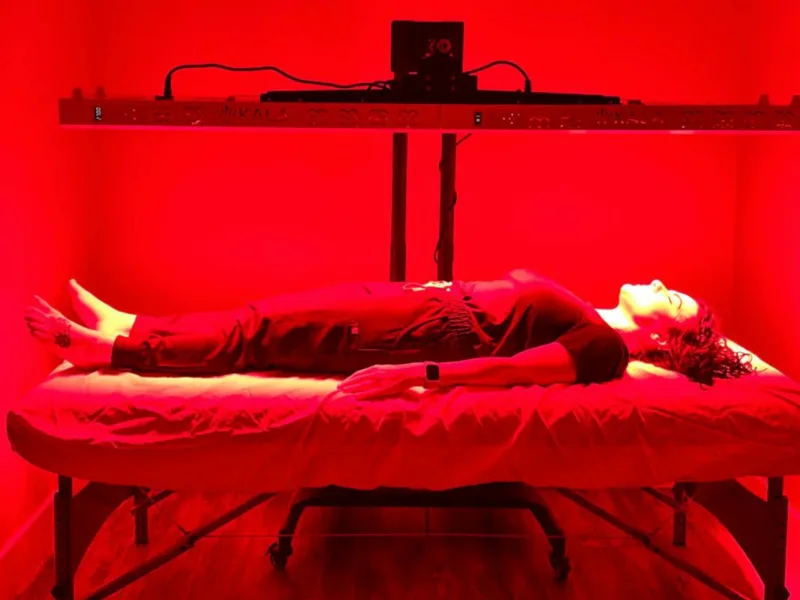
Photobiomodulation (PBM), commonly known as red light therapy, is a non-invasive treatment that uses specific wavelengths of red and near-infrared light to support tissue repair, help reduce inflammation, and assist with pain management.
Please Note
🔹 Not available for new patient appointments.
🔹 Patients with medical contraindications to red light therapy are not eligible. ( phosensitivite medication or other ,epilepsy)
🔹 Participation is completely optional.
Research suggests that these wavelengths interact with cellular structures, including mitochondria and cell membrane photoreceptors, helping support the production of adenosine triphosphate (ATP), the primary energy source used by cells. This process may contribute to tissue healing and recovery.
Some studies have also explored the role of photobiomodulation in supporting bone and soft-tissue repair by influencing cellular activity involved in regeneration and healing.
Why Consider Red Light Therapy?
Book your clinical photobiomodulation session to support:
✨ Tissue healing and recovery
✨ Reduction of inflammation
✨ Temporary relief of pain and discomfort
✨ Improved cellular function
✨ Enhanced recovery following injury or treatment
Supported by ongoing scientific research, photobiomodulation works by helping your cells perform their natural repair processes more efficiently.
🔬 The Science & History of Photobiomodulation
🏆 Nobel Prize-Winning Foundations (1903)
In 1903, Niels Ryberg Finsen received the Nobel Prize in Physiology or Medicine for demonstrating that concentrated light could be used therapeutically to treat certain skin diseases, including lupus vulgaris. His discoveries helped establish the scientific foundation for medical light therapies.
🔍 Research Expansion in the 20th Century
Following the invention of the laser in the 1960s, researchers such as Endre Mester investigated the biological effects of low-level laser exposure. Their work demonstrated potential benefits related to wound healing and tissue repair, helping lay the groundwork for modern photobiomodulation research.
🚀 NASA Research in the 1990s
In the 1990s, NASA-funded investigations explored the effects of red and near-infrared light on biological systems. Researchers observed effects on cellular activity and tissue healing, contributing to growing scientific interest in therapeutic light applications.
📚 What Current Research Suggests
Modern photobiomodulation typically uses:
🔴 Red light (approximately 600–700 nm)
🔴 Near-infrared light (approximately 800–1000 nm)
Research has demonstrated potential benefits in several areas:
⚡ Cellular Function & Energy Production
✨ May support mitochondrial function and ATP production, helping cells carry out normal repair and maintenance processes.
🌿 Skin Health
✨ Clinical studies have reported improvements in collagen production, skin texture, and overall skin appearance in certain populations.
💪 Pain & Inflammation
✨ Research suggests photobiomodulation may help reduce pain and inflammation associated with some musculoskeletal conditions, including osteoarthritis and soft-tissue injuries.
🩹 Wound Healing
✨ Multiple studies indicate that red and near-infrared light may support wound healing and tissue recovery by promoting cellular repair processes and reducing inflammation.
ℹ️ Important Information
🔹 Red light therapy is intended to complement, not replace, appropriate medical care.
🔹 Individual results may vary, and not all conditions respond similarly to treatment.
🌟 Schedule Your Complimentary Session Today
Support your recovery, healing, and overall wellness with clinical photobiomodulation therapy. Let your cells do the work. ✨🔴
For more info and research , visit; https://www.nih.gov/ https://pubmed.ncbi.nlm.nih.gov/
Connectez-vous et indiquez-nous votre régime pour voir ce que vous coûterait une visite. Se connecter
FREE RED LIGHT THERAPY SESSIONS FOR ACTIVE CARE PATIENTS Sessions must be scheduled in the clinic before your appointment. What Is Photobiomodulation (Red Light Therapy)? Photobiomodulation (PBM), commonly known as red light therapy, is a non-invasive treatment that uses specific wavelengths of red and near-infrared light to support tissue repair, help reduce inflammation, and assist with pain management. Please Note 🔹 Not available for new patient appointments. 🔹 Patients with medical contraindications to red light therapy are not eligible. ( phosensitivite medication or other ,epilepsy) 🔹 Participation is completely optional. Research suggests that these wavelengths interact with cellular structures, including mitochondria and cell membrane photoreceptors, helping support the production of adenosine triphosphate (ATP), the primary energy source used by cells. This process may contribute to tissue healing and recovery. Some studies have also explored the role of photobiomodulation in supporting bone and soft-tissue repair by influencing cellular activity involved in regeneration and healing. Why Consider Red Light Therapy? Book your clinical photobiomodulation session to support: ✨ Tissue healing and recovery ✨ Reduction of inflammation ✨ Temporary relief of pain and discomfort ✨ Improved cellular function ✨ Enhanced recovery following injury or treatment Supported by ongoing scientific research, photobiomodulation works by helping your cells perform their natural repair processes more efficiently. 🔬 The Science & History of Photobiomodulation 🏆 Nobel Prize-Winning Foundations (1903) In 1903, Niels Ryberg Finsen received the Nobel Prize in Physiology or Medicine for demonstrating that concentrated light could be used therapeutically to treat certain skin diseases, including lupus vulgaris. His discoveries helped establish the scientific foundation for medical light therapies. 🔍 Research Expansion in the 20th Century Following the invention of the laser in the 1960s, researchers such as Endre Mester investigated the biological effects of low-level laser exposure. Their work demonstrated potential benefits related to wound healing and tissue repair, helping lay the groundwork for modern photobiomodulation research. 🚀 NASA Research in the 1990s In the 1990s, NASA-funded investigations explored the effects of red and near-infrared light on biological systems. Researchers observed effects on cellular activity and tissue healing, contributing to growing scientific interest in therapeutic light applications. 📚 What Current Research Suggests Modern photobiomodulation typically uses: 🔴 Red light (approximately 600–700 nm) 🔴 Near-infrared light (approximately 800–1000 nm) Research has demonstrated potential benefits in several areas: ⚡ Cellular Function & Energy Production ✨ May support mitochondrial function and ATP production, helping cells carry out normal repair and maintenance processes. 🌿 Skin Health ✨ Clinical studies have reported improvements in collagen production, skin texture, and overall skin appearance in certain populations. 💪 Pain & Inflammation ✨ Research suggests photobiomodulation may help reduce pain and inflammation associated with some musculoskeletal conditions, including osteoarthritis and soft-tissue injuries. 🩹 Wound Healing ✨ Multiple studies indicate that red and near-infrared light may support wound healing and tissue recovery by promoting cellular repair processes and reducing inflammation. ℹ️ Important Information 🔹 Red light therapy is intended to complement, not replace, appropriate medical care. 🔹 Individual results may vary, and not all conditions respond similarly to treatment. 🌟 Schedule Your Complimentary Session Today Support your recovery, healing, and overall wellness with clinical photobiomodulation therapy. Let your cells do the work. ✨🔴 For more info and research , visit; https://www.nih.gov/ https://pubmed.ncbi.nlm.nih.gov/
Photobiomodulation déclare facturer directement :
Openings vérifié il y a 15 min
Ailio ne vous facture jamais de frais de réservation.
Aucune disponibilité
Nous affichons ce que cette clinique publie pour la réservation en ligne. Certains rendez-vous se prennent uniquement par téléphone ou via la liste d’attente de la clinique.


 Ajouter